
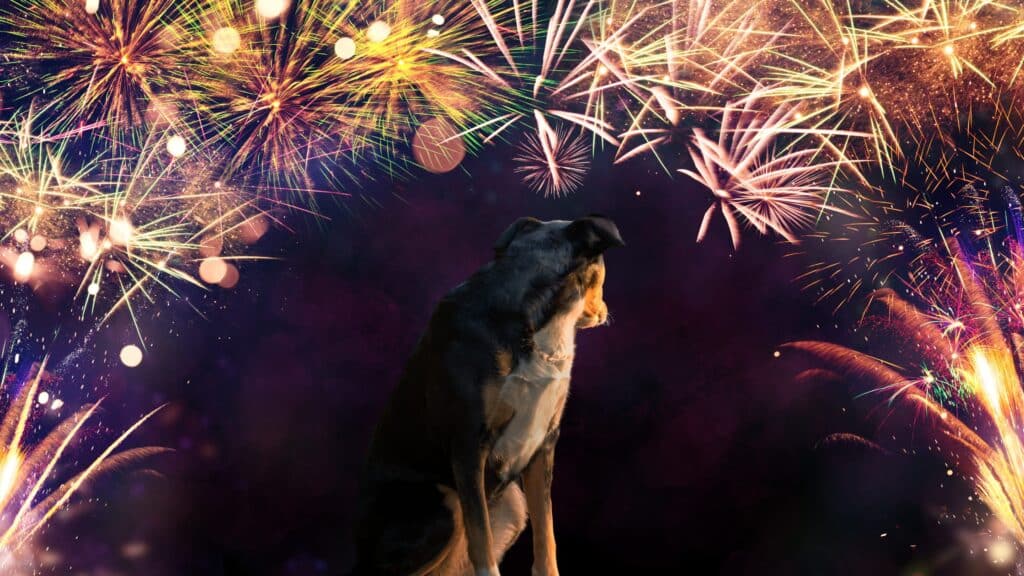
The government has launched a public consultation on fireworks, asking for views on issues including noise limits, banned products, and the rules around sale and use.
It’s a rare opportunity to tell the government directly that the harm fireworks cause to wildlife can no longer be ignored.
At Protect the Wild, our position is clear: we’re calling for a complete ban on the use of fireworks by the public. The government’s consultation stops short of this: it doesn’t propose a full public ban. But we believe nothing less will do. Organised, professionally run displays could still go ahead safely under licence, but fireworks should no longer be freely available for anyone to set off at will.
If you agree with us, please take just one minute to fill in our handy consultation form. We’ve answered the government’s questions for you, so all you need to do is add your name and send it.
Tell the government your views
Every year, fireworks cause needless suffering to wild animals, companion animals and farm animals. And this year, fireworks are presumed to have caused at least three wildfires in July alone.
As anyone who lives with companion animals will know, fireworks cause cats and dogs extreme stress. Many of us will have tried to comfort a dog who is uncontrollably shaking and panting as they hear bangs. Dogs hear noises around four times sharper than humans, and cats’ hearing can be even more sensitive, so the bangs are far more intense than humans perceive them. Mammals can suffer from tinnitus, hearing loss and long-term hearing damage caused by fireworks.
Respond to the consultation
Evidence that fireworks harm wild animals is growing. Research led by Anglia Ruskin University has found that corvids such as crows and jackdaws can abandon their roosts and flying erratically hours before main displays even began. Another study recorded the heart rate of wild geese soaring by 96% during a fireworks display. It took approximately five hours for the geese to display normal body temperatures after the fireworks ended.
A University of Birmingham study used radar to track birds across the city during Bonfire Night, Diwali and New Year, and found that fireworks drove them to take flight in far greater numbers and at much higher altitudes than normal. Flying in the dark like this can lead to disorientation and collisions, and forces birds to burn vital energy at the coldest time of year.
Use our quick response tool
Startled wild birds may abandon nests or young, suffer chronic stress, have fertility problems, or flee into danger. A recent international review concluded that, ultimately, a drastic reduction in the use of fireworks may be the only real way to protect birds and other wildlife from this disturbance.
Fireworks are also used by humans to deliberately to harm animals. And as long as anyone can buy them, that risk remains. In February 2026, Leighton Ashby and Oakley Hollands were jailed after beating a sheep to death and inserting legally purchased consumer fireworks into the animal’s body.
Send your response now
Other countries have already recognised the harm fireworks cause and have acted. The Netherlands has banned the sale and use of consumer fireworks by the public from New Year 2026/27, leaving only the mildest novelty fireworks on sale, while professional displays continue under licence. Animal welfare was a decisive factor in getting the ban passed.
Ireland is among the strictest countries in the world: the public can only buy the mildest category of fireworks, with everything more powerful restricted to licensed professionals.
Denmark has tightened its rules too, doubling fines and sharply restricting when the public can buy and set off fireworks, though campaigners there are still pushing for a full ban.
If these countries can act to protect people and animals, so can the UK.
- Use our quick response tool to send your consultation answers in seconds.