
Welcome to the eighth edition of Eye on the Wild, our new weekly roundup designed to keep you up to date with the latest stories concerning British wildlife.
If you have a story you think we should cover, email us at contact@protectthewild.org.uk
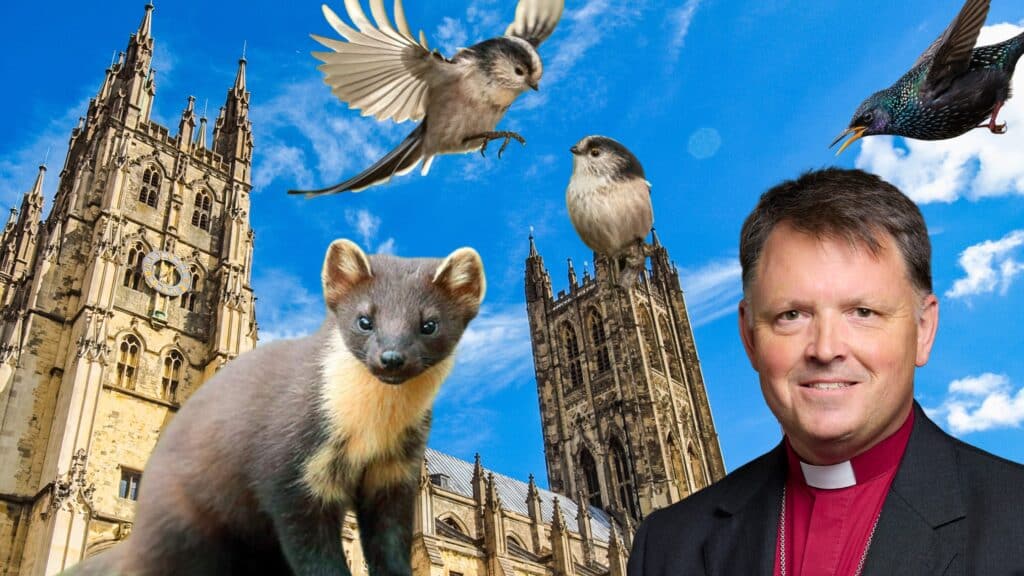
The Church of England has voted AGAINST a plan to rewild 30% of its land by 2030
The Church of England is one of the biggest landowners in the UK, and its secretive investment arm, the Church Commissioners, manages a portfolio worth over £11bn. It owns Hyde Park, and even owns 10% of Gateshead Metrocentre shopping centre!
This week, CoE’s General Synod voted against committing to rewild 30% of its land by 2030. A private member’s motion called on the Church Commissioners to protect and restore nature across 30% of their land in line with the UK’s international 30by30 pledge – the target widely regarded as the minimum needed to halt and reverse nature’s decline.
The Bishop for Environment, along with other Bishops, worked together to pass an amendment which set out alternative aims but contained no measurable rewilding targets.
A pitiful 3.5% of the Church’s 103,000 acres of rural land is currently managed for nature.
Conservation organisation Wild Card, which has been working tirelessly to call on the Church to make the rewilding commitment, said:
“It’s disheartening that, faced with the chance to act decisively on the biodiversity crisis, the bishops chose not to save the Earth.”
Follow and support Wild Card, which calls for the UK’s biggest landowners to rewild their land.

Wildfires across the UK have devastated wildlife and habitats
And in the High Peak district, a fire that first broke out nearly three weeks ago in Tintwistle has spread across the moorland and burned an area the size of at least 350 football pitches.
A huge wildfire near Conwy Mountain and the Sychnant Pass in North Wales forced evacuations and was declared a major incident.
Possibly the most serious for wildlife has been in the Cairngorms National Park, where a fire that broke out on 15 July near Glenmore has spanned a 6-kilometre area, and is currently still burning.
It has scorched more than 400 hectares of the RSPB’s Abernethy reserve, including irreplaceable ancient Caledonian pinewood. This is heartbreaking news for the Capercaillie, a rare, ground-nesting grouse for which the Cairngorms is its last UK stronghold. The species is at risk of extinction. Earlier this year, RSPB Abernethy celebrated that numbers of Capercaillie had increased by 50% in the last five years. To see fire tearing through that habitat now is absolutely devastating.
There have been more fires across England: a blaze near Durham University, as well as heathland fires in southern England.

The government’s 2030 nature plan for England is set to fail
The government unveiled its so-called “Delivery Plan” just days ago. Rather than introducing legal protections or fresh policies, it hopes landowners will step up voluntarily, largely through existing schemes.
Writer and campaigner Guy Shrubsole commented:
“The problem is, it’s not a plan, and it won’t deliver 30by30. It is, in fact, one of the weakest and most pathetic government documents I’ve read in a long time.”
He continued:
“For the government to expect to meet its 30by30 goal through landowners voluntarily bringing more land forward is as unrealistic as it is irresponsible.”
Now all eyes will be on Andy Burnham, who inherits this plan as he enters Downing Street on Monday, and who will need to deliver far more than his predecessor did. Because right now the government’s grand plan to save nature amounts to little more than a polite request that someone else deal with it.

And finally some good news!…
The UK signs the High Seas Treaty
It’s a vital step towards the global goal of protecting 30% of the ocean by 2030. But ratification is just the start. Now the government needs to put the treaty into practice. Once again, Burnham, all eyes are on your government.